How to Grow Your Business Without Doing More: Five Tips for Founders with Lewis Hunter
Growth is often seen as a measure of success. But when building a business comes at the expense of a founder’s time and wellbeing, it raises an important question: is working harder really the answer? We speak to entrepreneur and author Lewis Hunter about creating the right systems for sustainable growth, and the five practical changes every founder can make.
For many entrepreneurs, building a business begins with a personal vision. The freedom to pursue an idea, create something meaningful and shape a future on their own terms. Yet as a business grows, that sense of freedom can become increasingly difficult to maintain. The demands of running a company often leave founders caught between managing the day-to-day and finding the time to focus on what comes next. And while growth is typically associated with opportunity, it can also bring greater responsibility and pressure.
Research suggests that this tension can have a meaningful impact on wellbeing. A 2025 review published in the Journal of Small Business Management, examining 47 studies on entrepreneurial burnout, highlights the psychological demands of entrepreneurship and the importance of protecting founder wellbeing for long-term sustainability. Further research published in Small Business Economics found that entrepreneurs who experience better recovery outside work report improved wellbeing and lower levels of burnout. Together, these findings raise an important consideration for founders: creating a successful business is not simply about achieving more, but about building a way of working that remains sustainable as ambitions grow.
For Lewis Hunter, the answer lies in changing the relationship between the founder and the business itself. An entrepreneur, investor and co-author of The Operator Trap, Lewis has spent his career buying, building and backing businesses. Alongside Vincent Hovorka, he developed the Four Engines Framework, a model inspired by Formula 1 that helps founders move away from managing every aspect of their company towards building interconnected systems that support growth.
The framework focuses on four essential areas: Authority, Visibility, Revenue and Scale. Together, they offer a different perspective on business growth – one where the founder’s role evolves from doing everything to creating the conditions for the business to succeed. Drawing on his experience of two business exits and working directly with growing companies, Lewis shares his perspective on the challenges founders face, the importance of their surroundings and five practical ways to create more space for meaningful growth.
In conversation with Lewis Hunter
For anyone who hasn’t come across your work before, what led you to create the Four Engines Framework, and what were you seeing founders struggle with that conventional business advice wasn’t addressing?
I’ve been operating since I was fifteen, selling at school, and I’ve bought, built and backed businesses ever since. The pattern I kept seeing was owners who had built something real, were brilliant at what they did, and had still stopped growing, because they were the business. Sales, delivery, operations, strategy, all of it ran through them. Conventional advice tells those people to work harder, fix the sales script or post more content. That just adds to the load. Vincent Hovorka and I built the Four Engines Framework because we needed to stop running every part of our own businesses ourselves. It borrows from Formula 1, where no championship has ever been won by a single driver. Authority, Visibility, Revenue and Scale are four connected systems that between them replace the owner as the thing holding the company together.
In The Operator Trap, you explore what happens when founders become too involved in the day-to-day running of their business. What are the clearest signs that a founder has become the operator rather than the person leading the company forward?
The simplest test is this: if you stepped away for two weeks, what would happen to revenue? If the honest answer is that a big chunk of it disappears, you’re the operator. The other signs are just as clear. Every sales call needs you on it. Every decision, big or small, waits for you. You work harder every year and hit the same ceiling. Growth tracks your effort, not the system. You’ve become the most expensive employee in your own company. The one founders miss is what it does to the value of the business. The business that needs you most is worth the least, because nobody wants to buy something that stops the day the owner does. That’s key person risk, and it’s one of the first things I look at before I buy or back anything. Leading the company forward looks more like being a team principal than a driver. You design the machine, choose the people and set the strategy, then let the system do the work.
Founders often assume that growth means doing more. What should they actually be doing less of, and where is their time most valuable as a business grows?
Growth rarely comes from doing more. It comes from doing less of the work that doesn’t need you. Stop doing admin, delivery, operations and support yourself. Stop personally closing every deal and chasing every lead. Stop hoping that more content will build your brand on its own. Every task you do by hand is a ten-second pit stop when a proper system could make it 1.9. As the business grows, your time is worth most in a handful of places. Communication, because your income ceiling is your communication ceiling, and moving from one-to-one conversations to one-to-many is where authority comes from. Association, meaning the rooms you’re in and who introduces you. The numbers, especially lifetime value, because the business that knows what a customer is worth can afford to spend the most to win and keep them. And deals rather than sales: finding the outcome where both sides win. Everything else should be built into systems, AI and the right team.
How important are a founder’s surroundings to the way they perform? Do the spaces, people and routines around us have a meaningful impact on focus, decision-making and creativity?
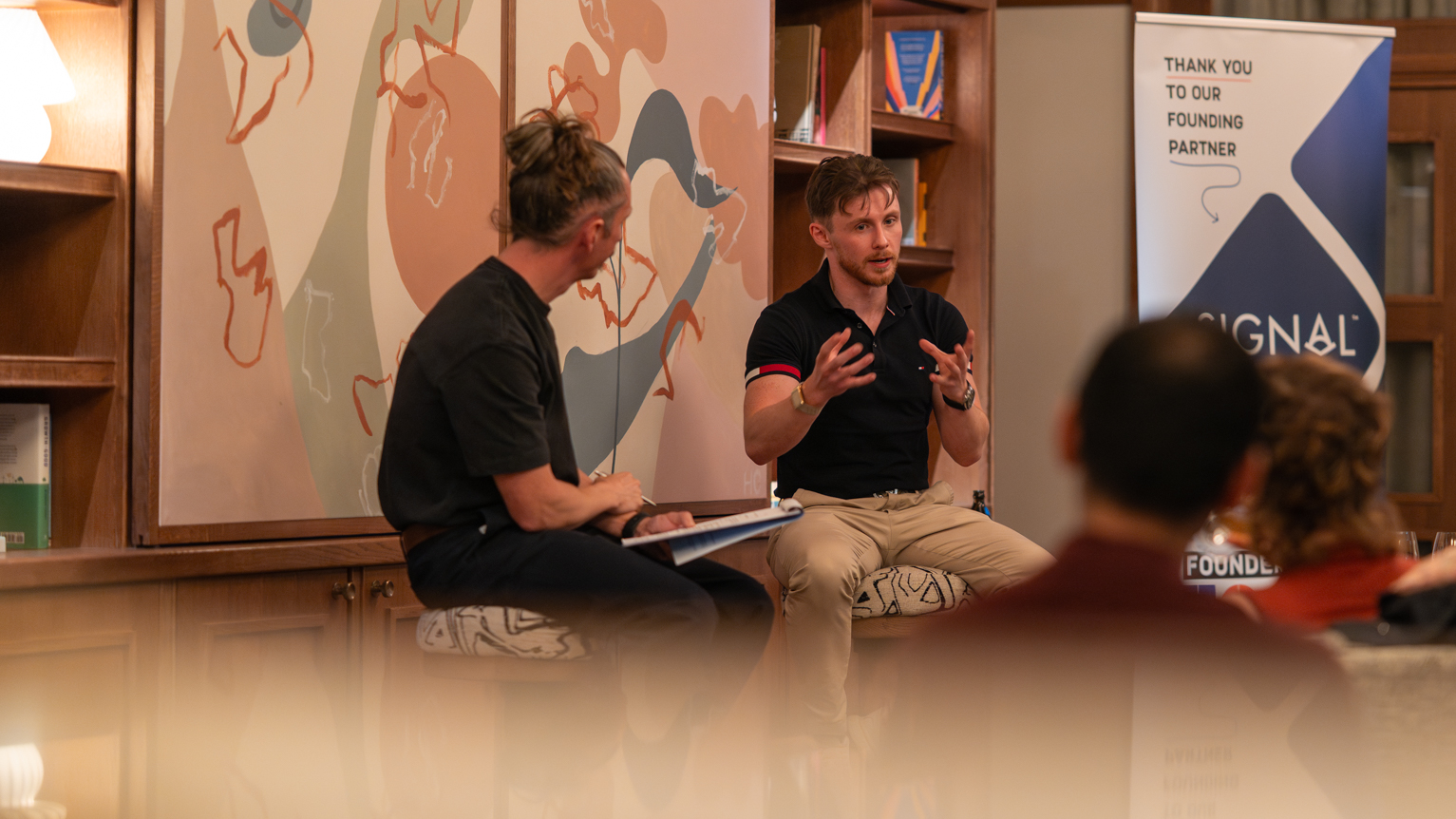
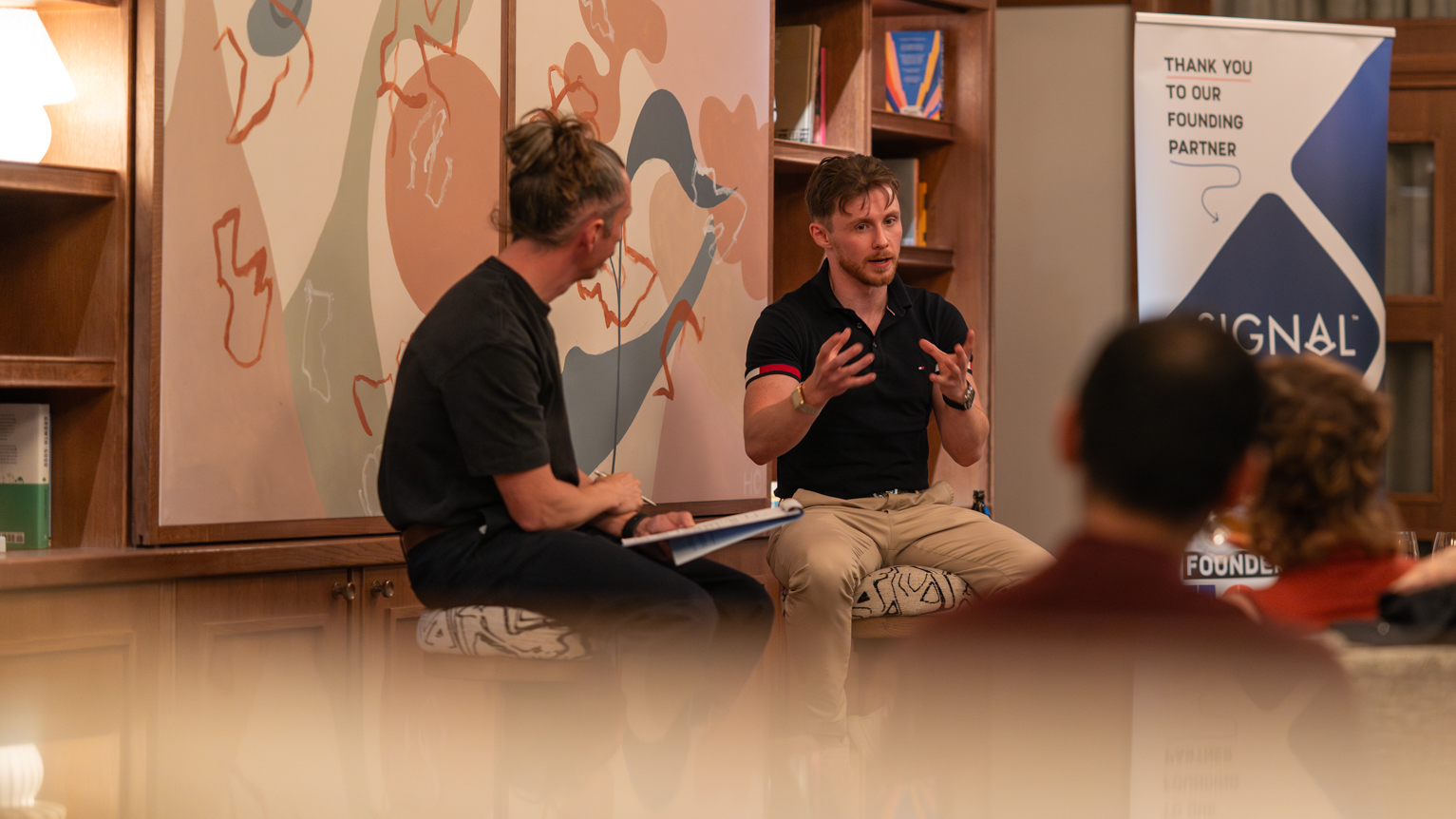
Hugely, and most founders leave it to chance. I’d start with people. Whose room you’re in, who you stand next to and who introduces you build your brand faster than content ever will, and they shape your thinking too. If everyone around you works the way you do, you’ll keep hitting the same ceiling. Those people also need to tell you the truth. Flattery from coaches, peers or AI tools feels good and costs you. If you’re doing something stupid, you need to be told. Routines matter because preparation is where performance gets decided. Races aren’t won at the finish line. They’re won in preparation, strategy and adapting in real time. It’s one reason I’m looking forward to being in the room at Founders500. (Founders500 is a community dedicated to bringing founders and entrepreneurs together to share experiences and learn from one another. Through its partnership with Maslow’s, Founders500 hosts conversations and events within the Houses, giving members the opportunity to hear directly from experienced business leaders. The sessions go beyond traditional success stories, exploring the challenges and important decisions behind building a business, while creating opportunities for meaningful connections and new perspectives.)
Five practical ways founders can grow while protecting their wellbeing
If you could give founders five practical changes they could make tomorrow to grow their business while protecting their own wellbeing, what would they be?

RUN THE TWO-WEEK TEST
Write down exactly what would break if you disappeared for a fortnight. That list is your plan for what to hand over first.

AUDIT LAST WEEK
Go through your diary and mark every hour you spent on work that didn’t actually need you. Pick the biggest item and hand it over this week.

WRITE ONE PROCCESS DOWN
Take the task you repeat most and document it so a team member, or an AI tool, can do it without you. You can’t scale what you operate manually.

WORK OUT YOUR COSTUMER LIFETIME VALUE
If you don’t know what a customer is worth over time, you don’t know what you can afford to spend to win and keep them, and you end up selling on price.

PUT YOUR CEO HOURS IN DIARY
Block time each week for the work only you can do: strategy, the right rooms and the right deals. Protect it like a client meeting, and stop measuring a good week by how exhausted you are.

Rethinking what growth looks like
Lewis’s perspective offers a valuable reminder that sustainable growth is not necessarily about doing more. Often, it begins with recognising where our time and attention can make the greatest difference. For founders, that means building systems that create capacity, surrounding themselves with people who offer fresh perspectives and making space for the thinking that moves a business forward. Because ultimately, success should offer more than commercial progress. It should create the freedom to enjoy what you’ve built, with the time and energy to consider what comes next.
Discover more about Lewis Hunter and the Four Engines Framework at lewis-hunter.com.