How Sound Affects Our Wellbeing at Work
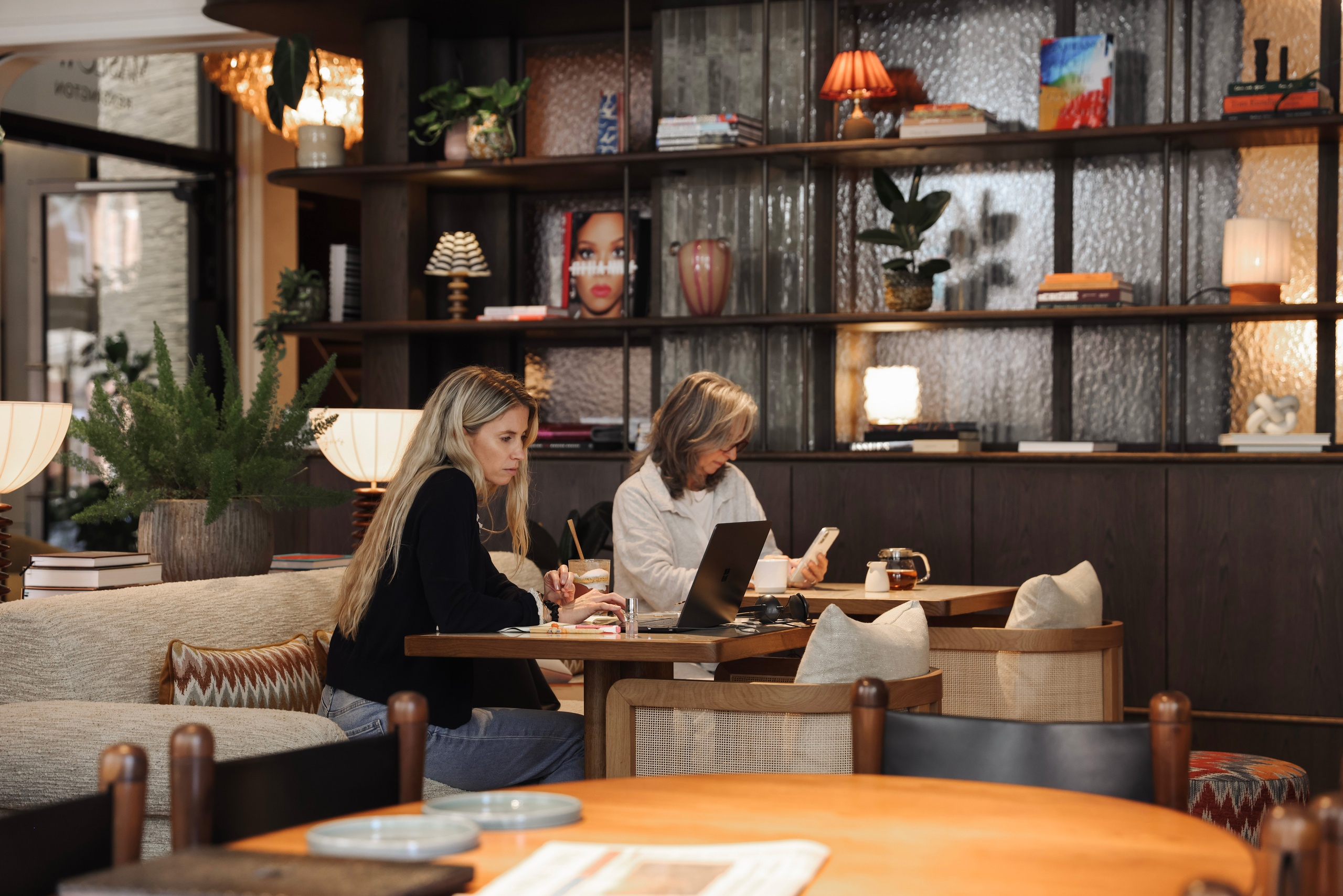
From the music that accompanies our mornings to the sounds that help us unwind, what we hear can have a meaningful influence on how we experience the working day. Think about the last time a particular song changed your mood. Perhaps it gave you the energy to start your morning, helped you concentrate on a demanding task or encouraged you to slow down after a busy day. Sound has a remarkable ability to shape how we feel, often without us consciously noticing.
But beyond personal preference, there is growing scientific interest in how music and sound can support our mental wellbeing, influence stress and affect our ability to focus. A 2022 study published in BMC Psychology explored the effects of music and mindfulness interventions in the workplace, finding that music-based interventions could help reduce perceived stress. Other research suggests that certain types of sound may support sustained attention, although the effects depend on the individual, the task and the listening environment. At Maslow’s, we believe the spaces we work in should support more than productivity alone. They should encourage balance, creativity and moments of restoration throughout the day. From carefully curated playlists to immersive sound experiences, sound is another way we bring this philosophy to life.
The Soundtrack to a Better Working Day
Sound is one of the less visible elements of interior design, yet it can have a significant influence on how we experience a space. For the opening of Maslow’s Kensington, we worked with MAV Music, a specialist music consultancy founded by Michael ‘Mikey’ Vettraino, to develop a collection of playlists that reflect the changing rhythms of the House. With over two decades of experience curating music for hospitality, members’ clubs and luxury destinations, MAV approaches music as part of a space’s identity, considering its atmosphere, purpose and the people who spend time there.
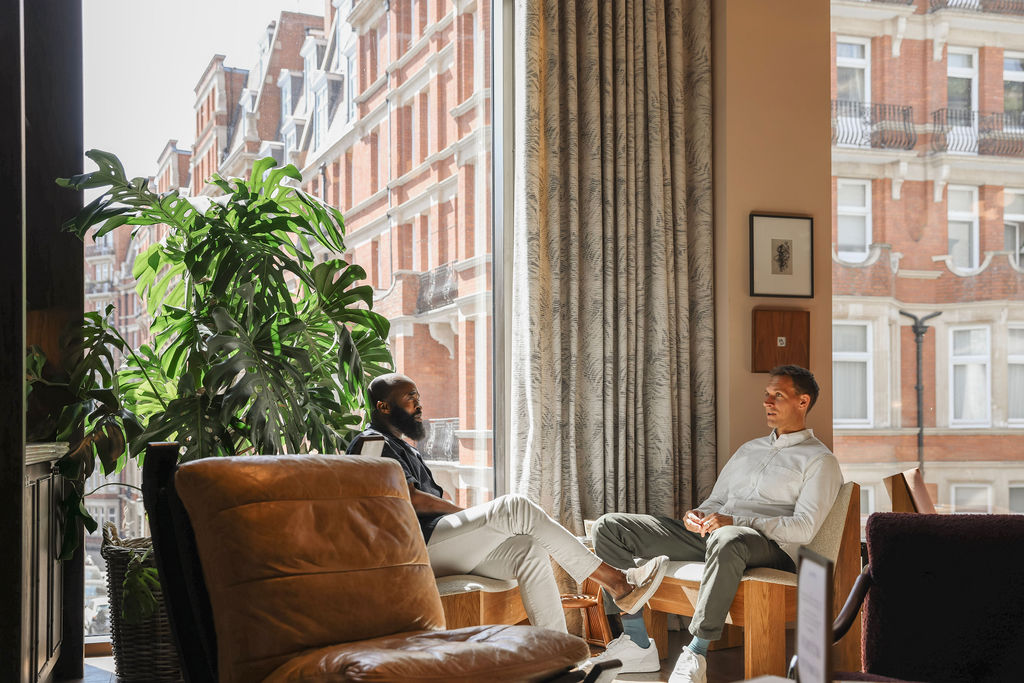
At Kensington, this translates into a soundtrack that evolves throughout the day. Slower, considered selections ease members into the morning, energising tracks accompany workouts in the gym, while more understated music creates an atmosphere suited to concentration and focused work. Among the most thoughtful additions is a dedicated ADHD-focused playlist, recognising that different minds respond to sound in different ways. A 2024 study published in Communications Biology found that music with particular rhythmic characteristics could support sustained attention, especially among participants experiencing greater attentional difficulties or ADHD symptoms. While there is no single type of music that works for everyone, the research highlights the potential value of creating different listening environments to suit individual needs. For Maslow’s, this is an important part of designing for wellbeing: understanding that there is no universal formula for how people work best and offering members greater choice in shaping their experience.
A Moment to Reset: Swell at Maslow’s Kensington
Sometimes, however, the most valuable sound in the working day is not the music accompanying it, but an opportunity to pause and listen with intention. In a world of constant notifications, meetings and competing demands on our attention, finding a moment to switch off can feel increasingly difficult.
A 2022 systematic review and meta-analysis of 22 study samples found that taking short breaks, often referred to as micro-breaks, can help reduce fatigue and improve feelings of energy. While the effects on performance vary, the findings reinforce the importance of making space for recovery throughout the working day. Recognising this, Maslow’s has partnered with Swell Studio, a sound-wellness platform founded by sound artist and producer Brian D’Souza, to bring personalised sound experiences to Maslow’s Kensington.
For D’Souza, the need for these moments begins with the constant pressure on our attention.

“We’re in this battle for attention right.”
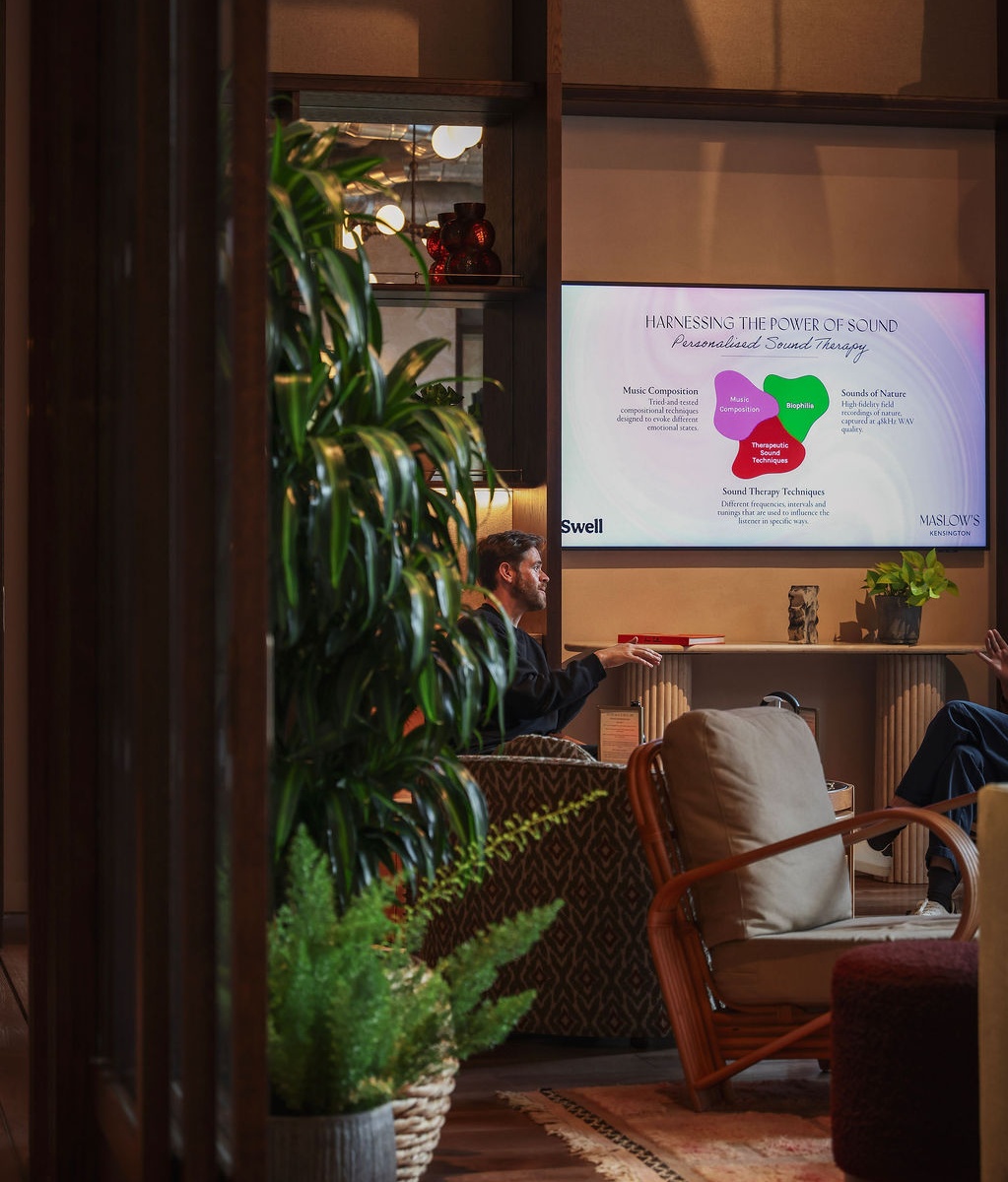
Through the Swell app, members can book a private studio at Maslow’s Kensington and immerse themselves in sound journeys designed to encourage relaxation, reflection and mental recovery. Combining elements of sound therapy, music and natural soundscapes, Swell uses generative technology to create listening experiences that can vary with each session. As D’Souza explains, the experience offers “the ability to be able to detach from a stressful day for just 15 minutes, five minutes even”, creating a moment of separation between the demands of the working day.
Drawing inspiration from established sound-wellness practices, Swell reimagines these experiences for the modern working environment. “We’re using elements from sound therapy, so a sound bath, a gong bath type of paradigm”, D’Souza explains, bringing these restorative practices into a more accessible, personalised format that fits naturally into the working day.
What makes Swell particularly distinctive is its ability to transport listeners beyond their immediate surroundings. Its immersive soundscapes take inspiration from natural environments around the world, creating an opportunity to mentally step away without physically leaving the House.
“So you can transport yourself to different spots of natural beauty… from Japan to Ibiza to an ancient forest south of London.”
Whether taking five minutes between meetings or unwinding after a demanding afternoon, the experience encourages members to make space for themselves. For Maslow’s, this reflects a wider philosophy: wellbeing should not be something reserved for the end of the working day. It should be accessible throughout it, through small, meaningful moments that help us return to what matters with renewed energy and perspective.
The Restorative Power of a Sound Bath
While Swell offers an opportunity for individual restoration, sound can also create moments of shared experience. Through our ongoing wellbeing programming, Maslow’s invites members to explore the benefits of sound in a more immersive setting, including sound baths led by Selia Sound, a collective specialising in meditative sound experiences.
Unlike a traditional bath, a sound bath involves being immersed in layers of sound, often created using singing bowls, gongs, chimes and other resonant instruments.
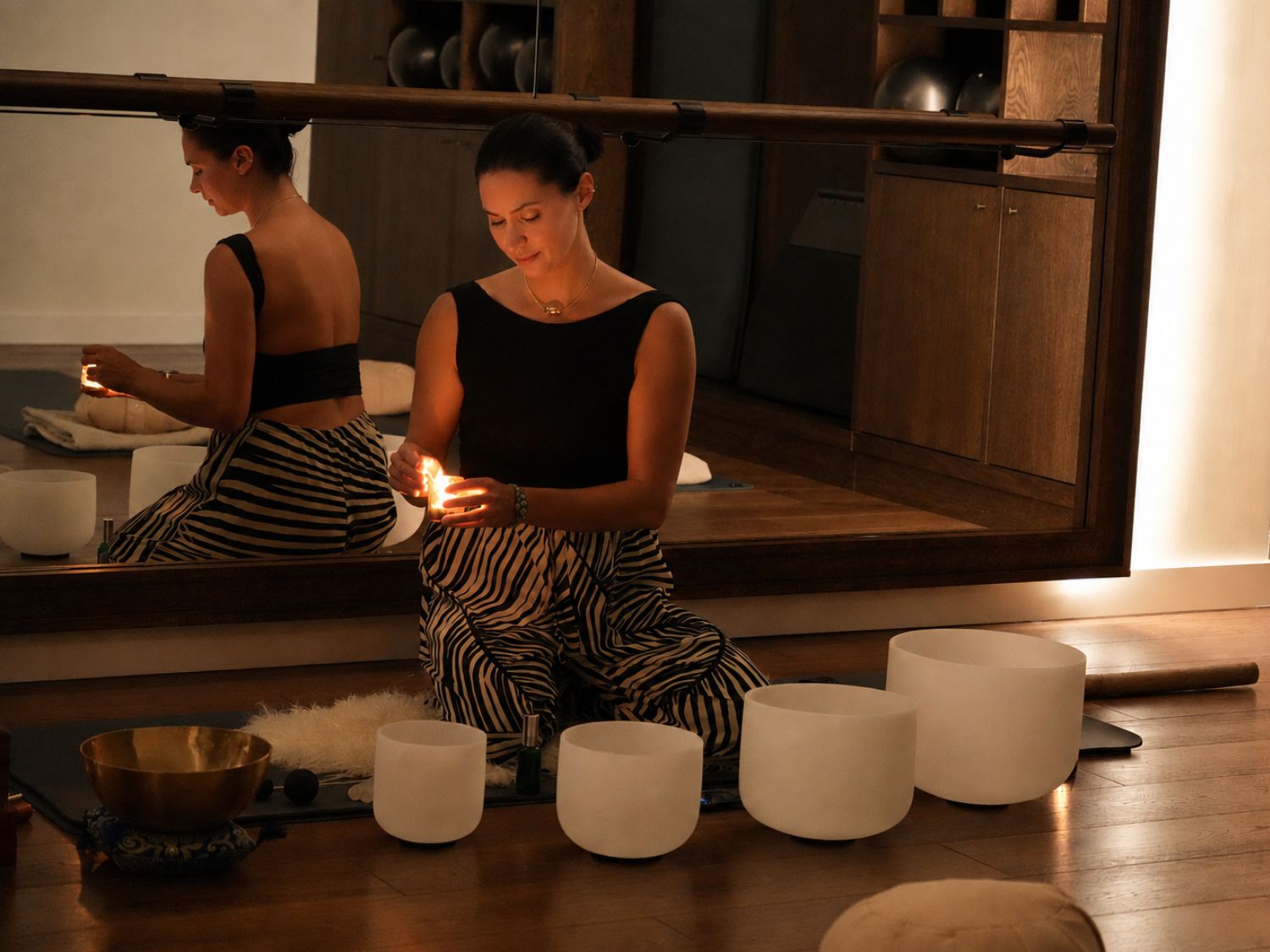
Participants typically lie down or sit comfortably while the sounds unfold around them, creating an environment that encourages stillness and relaxation.
The practice has attracted growing interest among researchers exploring its potential relationship with stress and psychological wellbeing. A 2025 systematic review of clinical studies examining singing-bowl interventions found promising evidence for improvements in anxiety, mood and sleep-related outcomes, while also highlighting the need for larger, more rigorous studies.
At Maslow’s, Selia Sound brings these practices into the House through guided sound experiences that encourage members to slow down, disconnect from everyday distractions and reconnect with themselves. These sessions offer something different from the individual experience of listening to music: an opportunity to step away from the demands of the day alongside others, sharing a moment of calm within the wider Maslow’s community.
Bringing Work and Wellbeing Into Harmony
The relationship between sound and wellbeing is deeply personal. What helps one person concentrate might distract another; what feels energising in the morning might feel overwhelming by the afternoon. This is why our approach at Maslow’s is not about prescribing a single soundtrack for better living, but creating opportunities for members to engage with sound in ways that suit their individual needs.
From MAV’s carefully curated music across the House to Swell’s personalised sound journeys and Selia Sound’s immersive group experiences, each brings a different dimension of wellbeing into the working day. Together, they reflect a simple belief at the heart of Maslow’s: when we create environments that consider how people feel, as well as how they work, we make space for a more balanced and fulfilling everyday life.